A common assumption is that scammers try to create perfectly believable stories. Most of the time, they don’t. What they actually need is to create enough emotional momentum that you stop evaluating the situation carefully. Once that happens, people start responding emotionally instead of analytically.
That’s why scams often feel urgent, emotionally charged, or unusually personal. The goal is to reduce hesitation
If there’s one tactic that appears in almost every scam, it’s urgency. Scammers create situations where it feels like immediate action is required:
- Your account is about to be locked
- A payment must be made now
- A family member is in trouble
- An offer is about to expire
Urgency works because it narrows focus. Instead of evaluating the entire situation, the brain shifts toward solving the immediate problem being presented.
This is why people often miss obvious inconsistencies during a scam that seem clear afterward. Their attention was redirected toward speed.
- Banks
- Government agencies
- Employers
- Tech companies
- Delivery services
People are conditioned to respond differently when they believe they’re interacting with an authority figure or legitimate institution. Questions decrease, skepticism lowers, and instructions are followed more quickly.
This is also why scammers increasingly use professional language, familiar branding, and even AI-generated communication. The more legitimate the interaction feels, the less resistance they encounter.
While fear is common in scams, emotional manipulation goes beyond panic. Scammers frequently use:
- Sympathy
- Excitement
- Loneliness
- Financial hope
- Romantic attachment
This is especially visible in relationship scams, investment scams, and long-term manipulation schemes. The key point is that emotional engagement changes decision-making. Once someone becomes emotionally invested, they stop evaluating the interaction as objectively as they normally would.
At that stage, logic alone is often not enough to break the cycle.
One of the clearest patterns in scam psychology is isolation from outside input. Scammers often discourage verification by:
- Creating time pressure
- Telling people to keep things confidential
- Claiming others “won’t understand”
- Preventing the person from pausing to think clearly
The more time someone has to verify information independently, the more likely the scam falls apart. That’s why scammers try to control the pace of the interaction.
People often assume intelligence protects against scams. It doesn’t. Scammers are not testing intelligence in the traditional sense. They are testing:
- Emotional state
- Attention level
- Stress response
- Trust patterns
- Timing
Someone under pressure, distracted, emotionally vulnerable, or rushed can respond differently than they normally would. This is why scam victims come from every background, profession, and education level.
The tactics are designed to exploit human behavior broadly. So it's not about lack of knowledge at all.
Many scams do not succeed immediately. Persistent scammers understand that repeated exposure increases familiarity. Over time, repeated messages, calls, or interactions can reduce resistance simply because the situation starts to feel more normal.
This is especially effective in:
- Romance scams
- Investment scams
- Long-term impersonation scams
The goal is gradual trust-building, not immediate success.
Learning the psychological tactics scammers use is important because it changes how you evaluate suspicious situations.
Instead of asking “Would I fall for this?” you start asking “What emotional response is this trying to create?”
It moves the focus away from confidence or instinct and toward identifying pressure, urgency, and manipulation patterns.

One of the biggest mistakes people make is relying entirely on their instincts to determine whether something is a scam. The problem is that psychological manipulation is specifically designed to override instinctive caution. Verification is more reliable than confidence.
That means:
- Confirming requests independently
- Slowing down urgent decisions
- Pausing before sending money or information
Organizations like the
Federal Trade Commission consistently warn about scams that rely on emotional manipulation and impersonation because these tactics remain highly effective.
Scams work because they manipulate attention, emotion, and decision-making, not because people are unintelligent. The tactics are designed to reduce hesitation long enough for someone to act before fully evaluating the situation.
The strongest defense against scams is not assuming you’re too smart to fall for one. It’s recognizing when someone is trying to control your emotional state or urgency
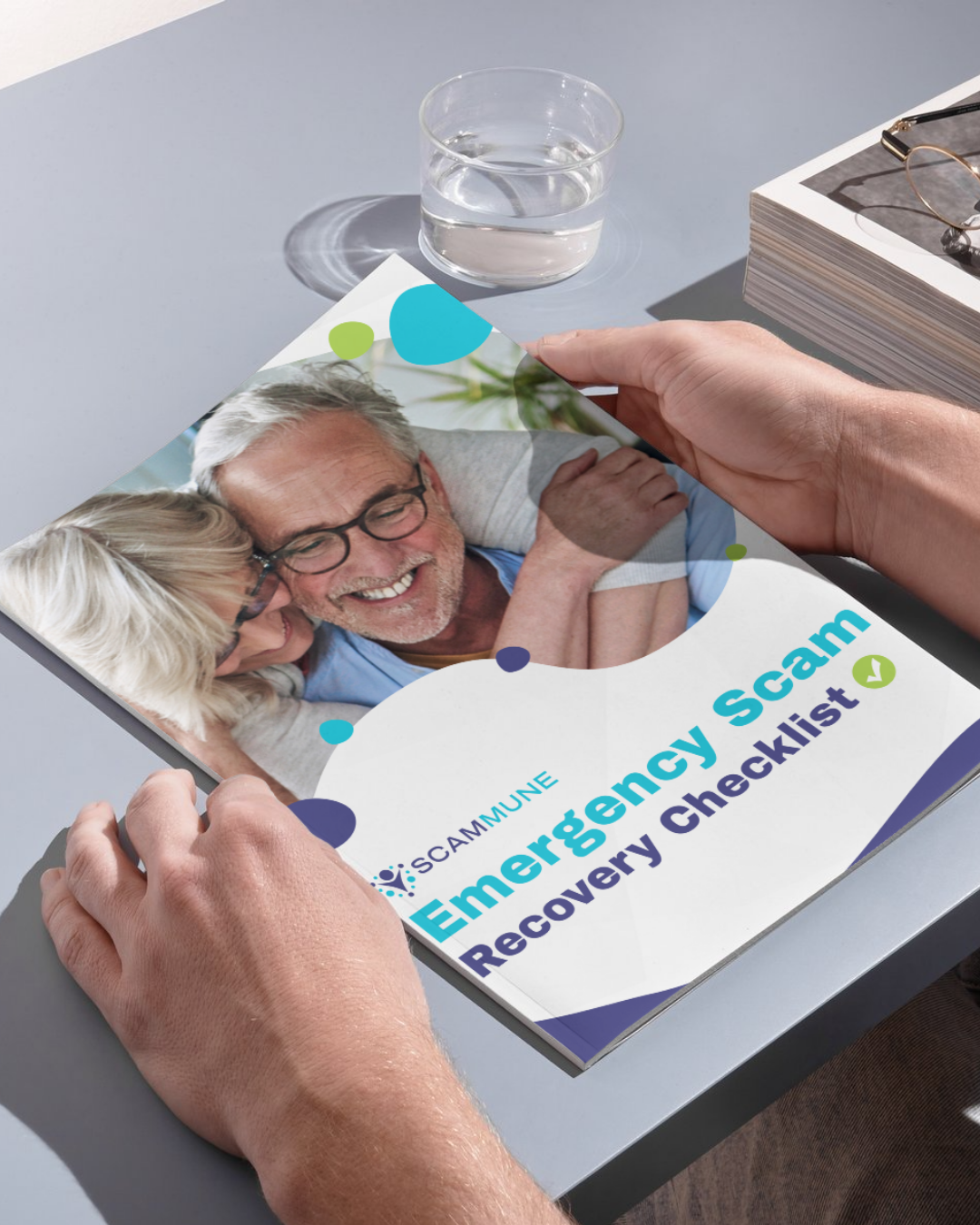
In situations like this, hesitation is common because people don’t have a clear process to follow.
The
Scam First Aid Freebie is designed to solve that. It gives you a step-by-step reference for moments when you’re thinking:
- “I was scammed.”
- “Is this a scam?”
- “What do I do right now?”
It’s built to help you act quickly and confidently, without needing to figure things out under pressure.
Download it, keep it accessible, and use it if you ever need it. Because the goal is not just to be able to respond this one time. The goal is to be prepared every time.