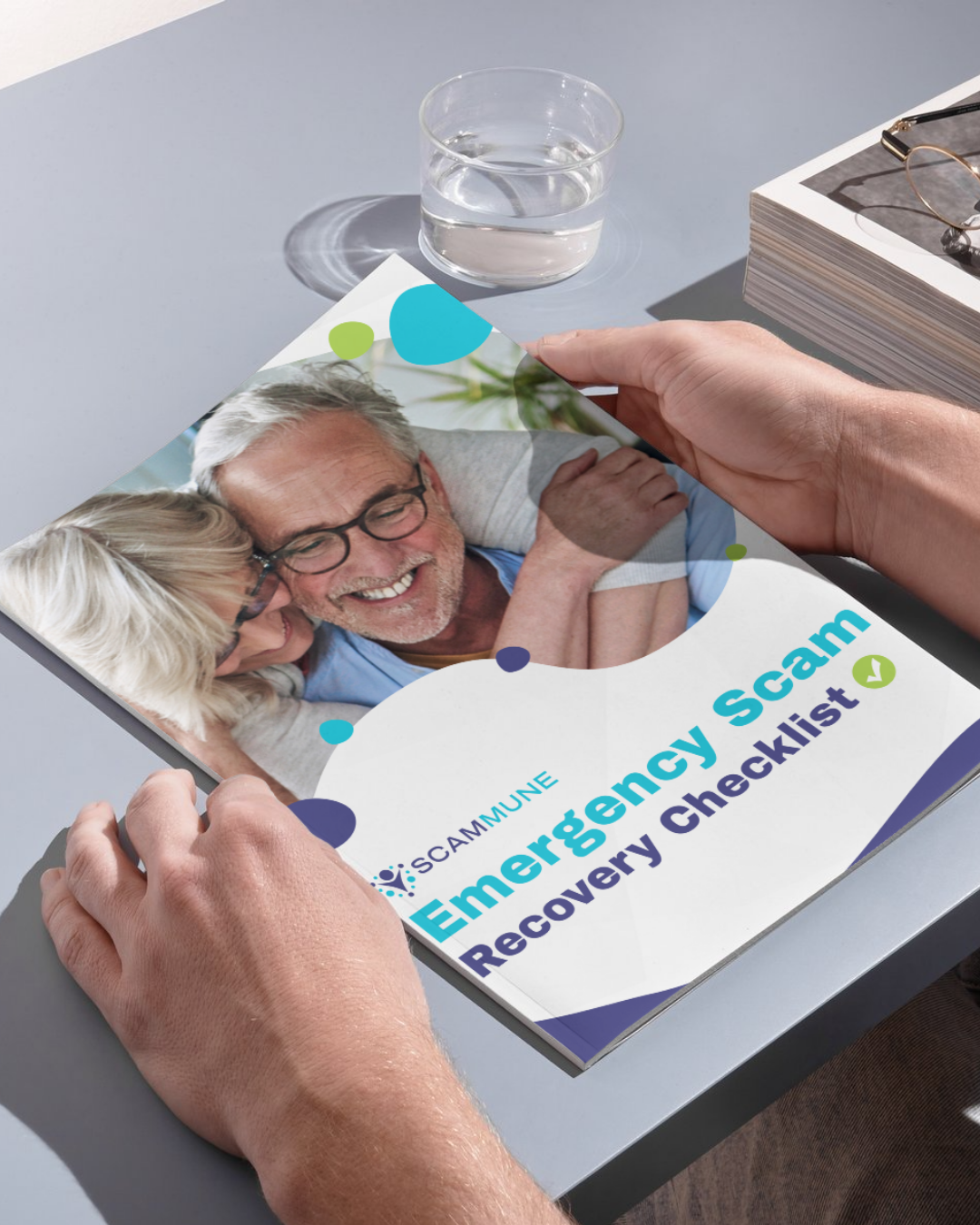
Before thinking about recovery in the long term, the first step is making sure the situation is contained.
Scams don’t always end after the initial interaction. There may still be access points, exposed information, or pending risks that need to be addressed.
At the very least, you need to stop all communications with the scammer, secure your accounts (email, banking, etc.), change your passwords and enable two-factor authentication, and contact your bank if money was involved.
Stabilizing the situation is about preventing further damage. Without this step, recovery becomes more difficult because the situation is still active.
A common misconception is that recovery equals getting your money back. While that’s possible in some cases, it’s not guaranteed.

Recovery is broader than that. It includes:
- Regaining control of your accounts
- Preventing additional financial loss
- Reducing the risk of identity misuse
- Rebuilding confidence in your decision-making
When you define recovery this way, the next steps become clear even if financial recovery is partial or not possible.
Aside from the financial side of things, recovery also involves the emotional side, which affects how people move forward.
Common reactions include:
- Embarrassment or self-blame
- Anxiety about future scams
- Loss of confidence in decision-making
- Hesitation to engage in similar situations again
Ignoring these responses doesn’t make them go away. But focusing on them without taking action can slow recovery.
You need to acknowledge what happened while staying focused on the practical next steps.
Know that scams are designed to work, not because you “failed”. Understanding this helps shift the focus back to control.
After a scam, some people become overly cautious. They avoid transactions, ignore legitimate opportunities, or hesitate to engage online.
While caution is useful, avoidance is not the goal.
To start rebuilding your confidence, you need to acknowledge what happened and understand that it is not your fault. Scammers know how to hack humans. That's why a lot of times, awareness is not enough. You need to be able to stay calm, think clearly, and say “no” before the scam ever takes root
Many people stay stuck because they focus only on what was lost.
The more effective way to handle the situation is to focus on what is still within your control:
- Securing your accounts
- Limiting further exposure
- Learning how the scam worked
- Taking steps to prevent future incidents
Recovering from a scam is a process. The faster you move from reaction to action, the more control you regain.
In situations like this, hesitation is common because people don’t have a clear process to follow.
The
Scam First Aid Freebie is designed to solve that. It gives you a step-by-step reference for moments when you’re thinking:
- “I was scammed.”
- “Is this a scam?”
- “What do I do right now?”
It’s built to help you act quickly and confidently, without needing to figure things out under pressure.
Download it, keep it accessible, and use it if you ever need it. Because the goal is not just to be able to respond this one time. The goal is to be prepared every time.